
Metso Outotec Cone Crusher B2B Procurement Review
Independent B2B sourcing analysis of Metso Outotec cone crushers, auditing metallurgy, third-party component lineages, and lifecycle cost profiles.

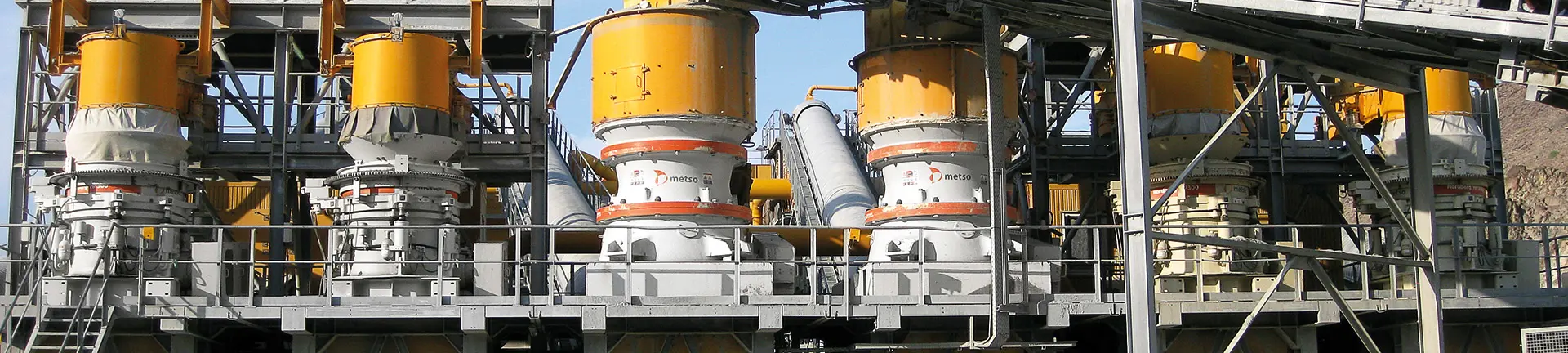
Metso Outotec Cone Crushers: Independent B2B Sourcing Review
Metso Outotec cone crushers deliver the industry's lowest total cost of ownership (TCO) for high-tonnage infrastructure projects, positioning the brand as the premium global benchmark for high-stress ore and aggregate reduction despite commanding a 25% to 40% capital expenditure (CAPEX) premium over mid-market alternatives.
Executive Procurement Summary & Brand Positioning
Metso Outotec occupies the apex tier of the global mineral processing market. The product portfolio bifurcates into two distinct design philosophies: the Nordberg HP Series (High Performance) utilizing a traditional bushing-based design with a fixed shaft, and the GP Series (Gyratory Cone) leveraging a pedestal-mounted rotating shaft configuration.
From a procurement perspective, asset managers must recognize that Metso does not compete on initial purchase price. The brand targets high-spec, multi-million-dollar infrastructure setups, mining operations, and large-scale quarrying networks where unplanned downtime exceeds $10,000 per hour. The pricing index realities reflect high upfront costs balanced by unmatched residual asset value on the secondary market and highly predictable operating expenses (OPEX).
Core Engineering Advantages & Metallurgic Footprints
Manganese Metallurgy and Liners
Metso utilizes proprietary alloy configurations for its wear parts, outlasting third-party foundry alternatives by 15% to 30%. Their XT, WT, and HX manganese steel liners incorporate precise chromium-to-manganese ratios (typically 18% to 22% Mn, 2% Cr modified) optimized via uniform heat treatment. This metallurgical control prevents early work-hardening failure and premature dimensional deformation under high crushing forces.
Mainframe Structural Integrity
The mainframes of the HP and GP series are cast from heavy-duty structural steel castings (equivalent to ASTM A148 Grade 90-60 or better). Metso employs automated robotic welding lines for all fabricated sub-assemblies, followed by stress-relieving thermal processing. This structural footprint ensures resistance to fatigue propagation under cyclic loading conditions, isolating the shell from structural stress fractures when processing hard rock types like granite, basalt, or taconite.
Uncompromising Tramp Release Systems
The HP series features an automated, double-acting hydraulic tramp release system. Unlike single-acting systems that fail to clear uncrushable materials efficiently, Metso's design combines high-pressure accumulators with large clearing strokes. This engineering choice permits the immediate passage of drill steel or uncrushable tramp iron, instantly resetting the crushing chamber to its operational closed-side setting (CSS) without mechanical frame distortion.
Component Lineage & Control Deck Infrastructure
Metso Outotec minimizes supply chain risk by embedding premium, globally recognized third-party components into their auxiliary loops and control cabinets. This strategy guarantees that local field technicians can source critical electrical and hydraulic components without sole-source dependency on factory warehouses.
- Automation & PLC Architecture: The proprietary Metso IC70C and IC10C automation systems are built on a robust industrial PLC foundation, typically utilizing Siemens S7-1500 or Schneider Electric processing architectures. The SCADA-compatible interface offers real-time monitoring of feed rate, power draw, and lubrication oil temperature.
- Hydraulic Sub-systems: High-pressure hydraulic loops, clamping cylinders, and tramp release systems leverage Bosch Rexroth or Danfoss pumps, proportional valves, and manifolds.
- Power Transmission & Bearings: Main countershaft drives and bevel gear sets feature precision-ground spiral bevel gears manufactured to AGMA Class 12 standards. Bearings are sourced directly from tier-one manufacturers, specifically SKF or Timken, ensuring high operational life factors ($L_{10}$ life exceeding 100,000 hours under rated load).
Technical Matrix: Premium Tier vs. Standard Sourcing Profiles
| Sourcing Metric / Component Sub-System | Premium Infrastructure Tier Config (e.g., Metso Nordberg HP4 / HP6) | Standard Mid-Market Config (Typical Regional Competitor) | Supply Chain Risk & Lead Time Variable |
|---|---|---|---|
| Bearing & Shaft Topology | Precision bronze bushings with fixed main shaft design | Spherical roller bearings with rotating shaft | Low Risk: Bushings are globally machinable; factory lead times for premium bearings range from 12–24 weeks. |
| Automation Integration | Metso IC Series PLC with cloud diagnostics | Basic relay logic or non-branded microcontrollers | Moderate Risk: Proprietary software updates require Metso activation codes. Lead times: 4–6 weeks. |
| Hydraulic Lineage | Integrated Bosch Rexroth / Danfoss manifolds | Localized white-label hydraulic components | Low Risk: Components are highly interchangeable worldwide with off-the-shelf parts. |
| Gearing Standards | Case-hardened, ground spiral bevel gears (AGMA 12) | Straight bevel or cut gears (AGMA 8–10) | High Risk: Custom tooth profiles mean lead times for replacement gears can exceed 16 weeks if out of stock. |
| Wear Part Alloys | Proprietary XT/HX Modified Manganese Steel | Standard Mn13Cr2 or Mn18Cr2 foundry castings | Moderate Risk: Third-party liners fit but compromise throughput and lower wear life by up to 30%. |
Global Supply Chain Risk Mitigation Guidelines
Enforce Component Lock-In Clauses
During final contract negotiations, procurement directors must stipulate an explicit Bill of Materials (BOM) lock-in clause. Ensure the factory provides the exact sub-component brands (e.g., specifying Siemens PLCs over regional variants). This prevents the substitution of localized sub-components during periods of factory supply chain disruption.
Secure Initial Wear Package Agreements
Metso equipment delivers optimized ROI when paired with genuine wear parts. Negotiate a fixed-price, multi-year manganese liner and mantle supply agreement indexed to global steel prices. Secure a guaranteed stock buffer at the nearest regional Metso distribution hub to eliminate the 8 to 12-week lead time vulnerability typical of heavy casting consumables.
Environmental Cladding Readiness
For projects located in extreme environments (e.g., high-altitude mining or desert aggregate setups), contracts must explicitly mandate the inclusion of the extended dust sealing package (including positive pressure air blowers and labyrinth seals) and synthetic oil lubrication heating/cooling loops. Standard configurations risk premature oil contamination, which invalidates the structural warranty of the internal bronze bushings.
Advanced Procurement FAQ
Q1: How does the lifecycle asset cost (LCC) of a Metso Outotec cone crusher justify its high initial CAPEX compared to lower-cost European or Asian alternatives?
A: While a Metso cone crusher commands a 25% to 40% premium upfront, its lifecycle asset cost is significantly lower when evaluated over a standard 10-year operational horizon. Lower-cost alternatives frequently suffer from frame fatigue fractures, gear teeth shearing, and erratic tramp release performance, leading to cumulative unscheduled downtime. Metso’s optimized crushing chamber geometry allows for higher cavity level operational density and higher crushing forces. This translates to up to 20% higher throughput per kilowatt of power consumed. When factored into a corporate finance model, the reduced power consumption (OPEX savings), extended liner longevity, and an industry-leading 50%+ residual resale value yield a much faster amortization schedule and higher long-term ROI.
Q2: What are the primary logistical and supply chain bottlenecks associated with sourcing genuine Metso components, and how can asset managers mitigate them?
A: The most critical supply chain bottlenecks reside in the custom spiral bevel gear sets, main shafts, and proprietary IC-series automation modules, which carry lead times ranging from 12 to 24 weeks during peak global demand cycles. To mitigate this risk, procurement managers should negotiate a "Critical Spares Consignment Package" directly into the capital equipment purchase contract. This package must include a countershaft assembly, a set of inner/outer bronze bushings, specialized seal kits, and a pre-programmed backup PLC module. This inventory should be housed either on-site or at a regional third-party logistics (3PL) facility under a bonded warehouse agreement, completely isolating the asset's availability from international transit delays.
About Metso
Metso is a frontrunner in sustainable technologies, end-to-end solutions and services for the aggregates, minerals processing and metals refining industries globally. We improve our customers’ energy and water efficiency, increase their productivity, and reduce environmental risks with our product and service expertise.
Purpose
The purpose of Metso is to enable sustainable modern life, and we aim to create solutions to accelerate sustainability in the industries we operate in. Our businesses are driven by the megatrends of urbanization, electrification, sustainability and resource scarcity. Our products and services are used in aggregates, minerals processing and metals refining processes to produce materials for the building materials of the modern world
Vision Industry benchmark.
Metso aim to become the definitive standard in our industry. By consistently delivering exceptional quality, innovation, and reliability, we aspire to earn the unwavering trust of our customers and stakeholders.
TAG
Heavy Machinery, Supply Chain Risk, Asset Management, Metallurgy & Engineering, Procurement Reviews,Heavy Machinery Reviews,Procurement Guides,Supply Chain AuditsMineral Processing
Request Technical Blueprints & Factory Quotes
Submit your machinery parameters below. Connect directly with verified, certified heavy industrial manufacturers to receive custom foundation drawings, layout schematics, and direct-from-factory pricing.